Homeowners across Chicago—from West Loop condos to large North Shore kitchens—usually start with one question: “What do custom kitchen cabinets cost?” The honest answer is: it depends, because cabinet pricing is driven by your layout, materials, door style, storage upgrades, lighting, and installation logistics.
Quick answer: Fully custom cabinetry is commonly priced by the linear foot. National cost guides like Angi and HomeGuide often cite ~$500–$1,200+ per linear foot installed for custom cabinets, with luxury designs and complex details running higher. Chicago pricing varies—especially for high-rise delivery and older-home conditions—but the same cost drivers apply.
If you want a quote that’s actually useful, start by understanding what moves the number. This guide breaks it down—without the fluff.
In this guide:
- Typical cabinet budget ranges (2026)
- 10 things that change the price fast
- Chicago-specific factors (condos vs. suburban homes)
- How to budget like a high-end client
- 2026 design direction: what clients are requesting
- How to get an accurate design + quote
- FAQ
Typical cabinet budget ranges (2026)
Cabinets are usually estimated two ways:
- By the linear foot (a quick budgeting method)
- By the full cabinet list (the real number—based on your exact design)
As a rough benchmark, many “standard” kitchens land around 25–40 linear feet of cabinetry, depending on layout and how much storage you include (uppers, pantries, islands, etc.). Fixr notes this common range, which is helpful for early planning.
| Cabinet level | Typical price range (installed) | Best for | Trade-offs |
|---|---|---|---|
| Stock / prefab | ~$100–$300 per linear ft (national ranges vary) | Quick turn projects, basic refreshes | Limited sizes/finishes, less “built-in” look |
| Semi-custom | ~$200–$650 per linear ft | Good value when you need some flexibility | Still limited on true custom features |
| Custom | ~$500–$1,200+ per linear ft | Primary homes, older homes, condos, unique layouts | More planning + longer lead times |
| Luxury / boutique custom | $1,200–$1,500+ per linear ft (and up) | Statement kitchens, architectural detailing, specialty finishes | Highest investment; detailing matters |
Source note: The ranges above are compiled from national pricing references (e.g., Angi and HomeGuide). Chicago labor rates, building logistics, and finish selection can move your final number.
A quick “back-of-napkin” estimate
If your design includes ~30 linear feet of cabinetry, a custom cabinet investment can land roughly in this zone:
- $15K–$36K (30 ft × $500–$1,200) for many custom projects
- $36K+ for luxury detailing, thick veneers, specialty finishes, or complex condo logistics
That’s not a quote—it’s a sanity check so you can plan confidently before you fall in love with a finish package.
10 things that change the price fast
When two kitchens are the “same size” but one costs far more, it’s usually because of these factors:
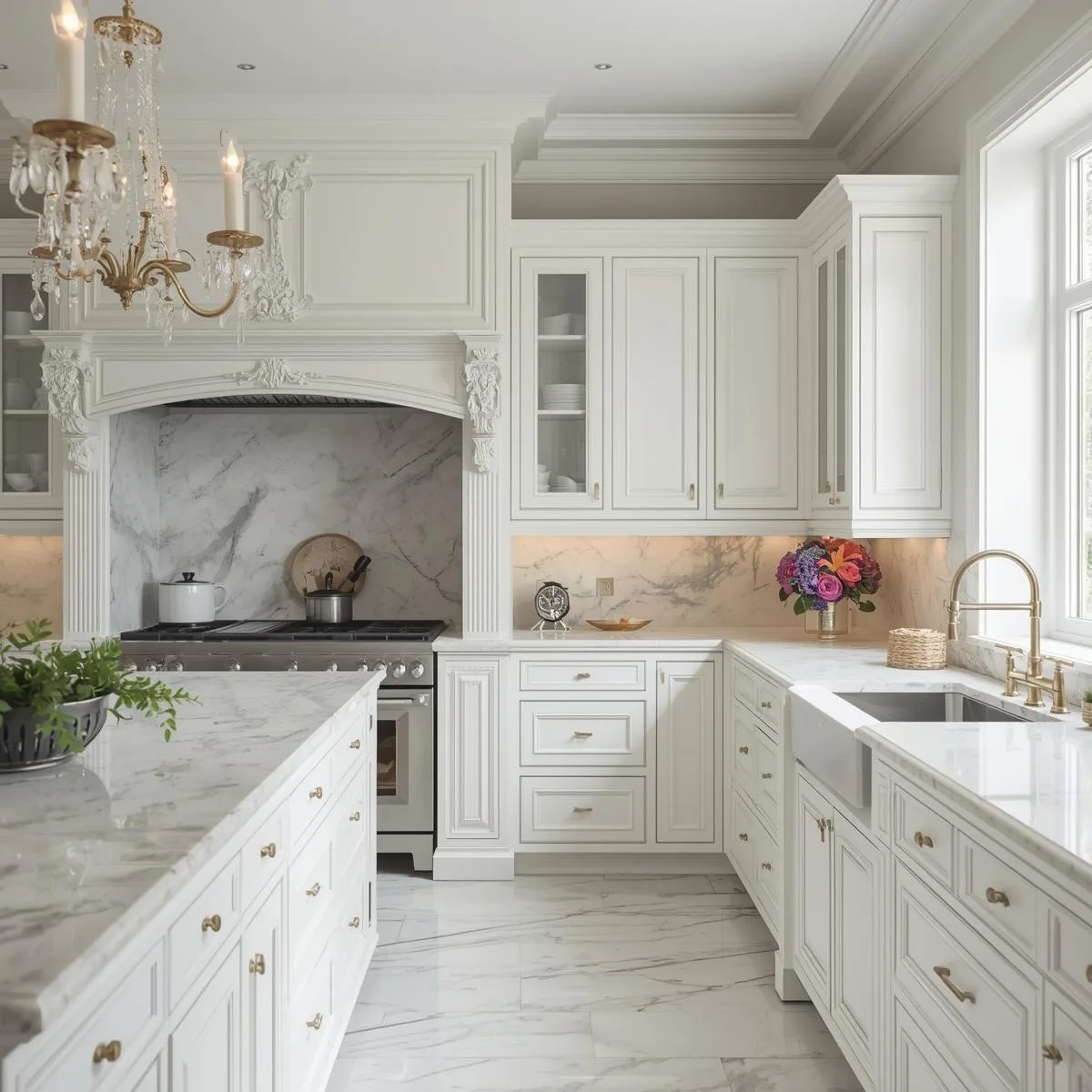
- Door style (slab vs. shaker vs. inset). Inset doors and intricate profiles take more precision.
- Finish system (matte, lacquer, stain, specialty paints). Premium finishes cost more and demand better prep.
- Box construction (plywood vs. engineered panels) and thickness (18mm vs. 3/4”).
- Hardware (hinges, drawer systems, lift-up doors, pull-outs). Soft-close is table stakes; premium systems add cost but also feel.
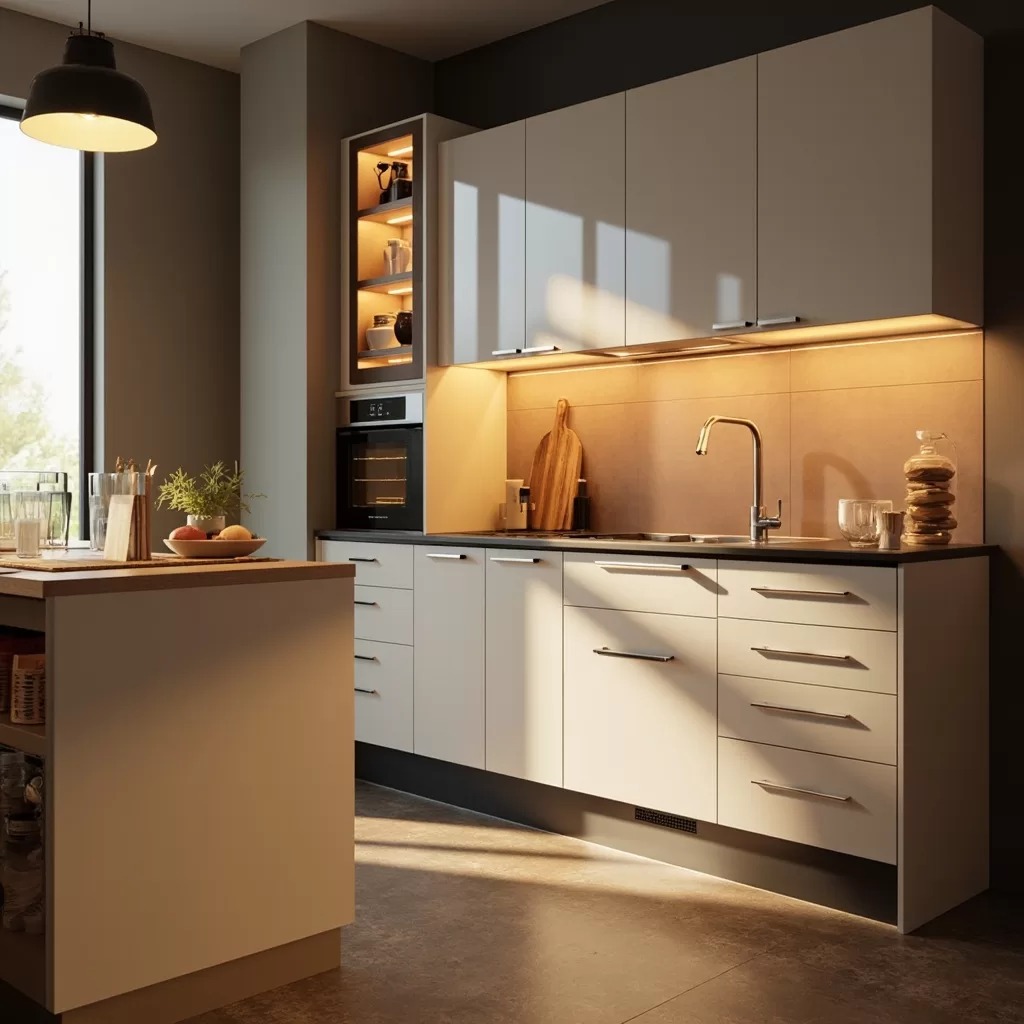
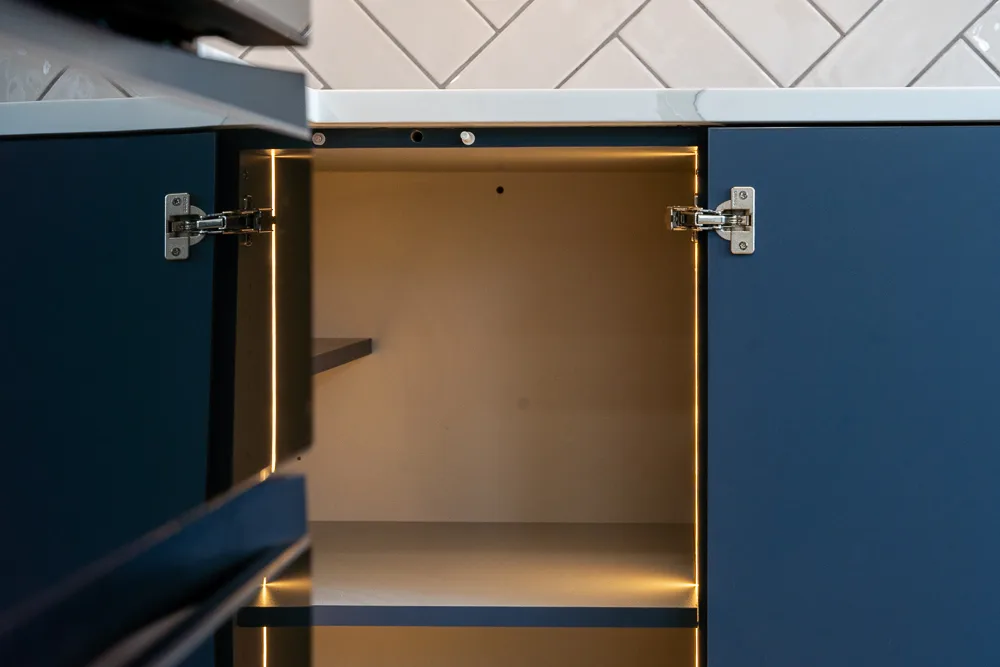
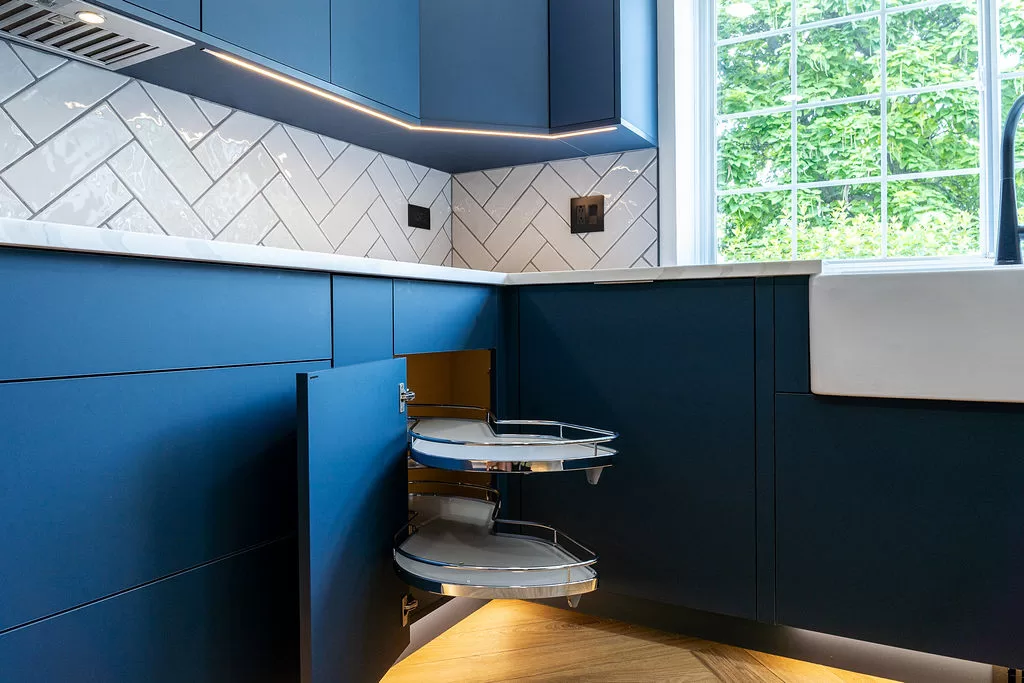
- Integrated lighting (under-cabinet, toe-kick, pantry verticals, interior drawer lighting).
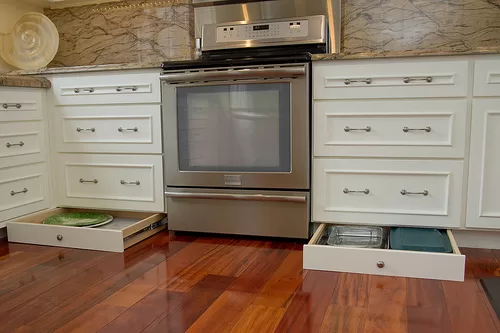
- Storage upgrades (spice pull-outs, tray dividers, waste/recycling, utensil systems, hidden toe-kick drawers).
- Panel-ready appliances and appliance garage/pocket doors (cleaner lines, more custom panels).
- Ceiling height + full-height cabinets. Floor-to-ceiling designs add material, but the payoff is huge.
- Site conditions (older homes, out-of-plumb walls, uneven floors, soffits you didn’t plan for).
- Installation complexity (tight condos, limited staging space, elevator reservations, delivery windows).
If you want ideas for maximizing space without changing your footprint, see: Modern Kitchen Corner Solutions and Kick Drawers (Hidden Toe-Kick Storage).
Chicago-specific factors: condo vs. suburban home
Chicago high-rise kitchens
- Delivery + elevator reservations: require precise timing, protective materials, and staged deliveries.
- Smaller kitchens: galley and L-shapes are common—storage upgrades matter more.
- Noise + work hour limits: can stretch the schedule.
- Building requirements: COI paperwork, approved contractors, debris rules, etc.
If you’re remodeling in a condo or high-rise, don’t miss: Chicago High-Rise Kitchen Remodel Guide (2026).
North Shore + suburban homes
- Bigger footprints: more linear feet, plus islands, beverage stations, and large pantries.
- Higher ceilings: full-height cabinetry becomes a signature feature.
- Entertaining layouts: appliance panels and integrated storage keep the kitchen calm and uncluttered.
How to budget like a high-end client (without wasting money)
High-end kitchens aren’t expensive because they’re “fancier.” They’re expensive because the details are consistent. Here’s where spending pays off:
- Spend on: drawer systems, hinges, organizers you use daily, integrated lighting, and the finish you touch every day.
- Be strategic on: decorative panels and rare specialty features (use them where they’ll be noticed).
- Don’t cheap out on: installation. Luxury cabinets installed poorly look like budget cabinets.
A practical rule of thumb: cabinets often represent a major share of the total kitchen investment. (In many remodels, cabinetry can be ~30–40% of the budget.) For related planning questions, see: Top Questions Homeowners Ask Before Designing a Custom Kitchen.
2026 design direction: what Chicago clients are requesting
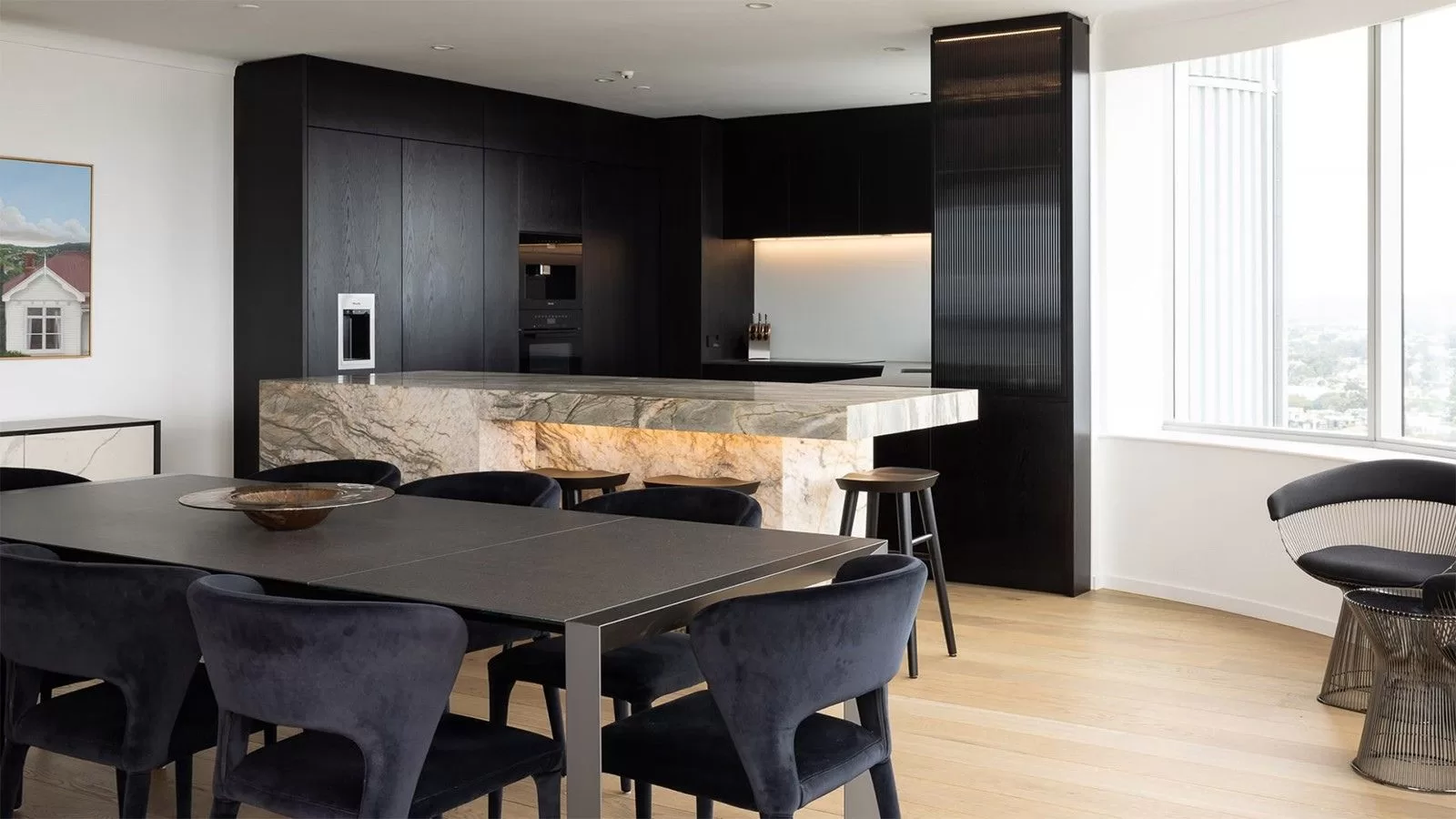
Going into 2026, we’re seeing Chicago kitchens move toward “warm minimalism”—clean lines with richer textures. Industry research points the same way. For example, the NKBA/KBIS 2026 Kitchen Trends Report highlights strong ongoing demand for timeless/transitional kitchens, along with contemporary/minimal and organic/natural styles.
- Natural materials + warm wood tones (especially when paired with matte finishes)
- Full-height cabinetry for a built-in, architectural look (why it matters)
- Integrated lighting as a design feature (not an afterthought) — see lighting placement ideas
- Hidden storage (toe-kick drawers, appliance garages, deep drawer banks)
- Mixed materials (wood + matte painted fronts, stone + textured cabinetry)
- Panel-ready appliances and cleaner sightlines (especially in open layouts)
How to get an accurate cabinet quote (and avoid sticker shock)
If you want a quote that actually helps you decide, here’s the fastest path:
- Start with your layout (existing plan or a simple sketch with measurements).
- Choose a “finish direction” (painted matte, wood veneer, high-gloss, etc.).
- Pick your must-have storage upgrades (trash pull-out, pantry pull-outs, corner solution, etc.).
- Decide if you’re changing plumbing/electrical (big impact on timeline and total remodel cost).
- Schedule a design consult so the cabinet list is built correctly the first time.
At Sebior, our cabinetry is designed for Chicago homes and includes details many homeowners add later—like integrated LED lighting and premium soft-close hardware. Explore our kitchen collections here: Custom Kitchen Cabinets.
Which Sebior collection fits your project?
- Boston Kitchen — premium custom craftsmanship (shaker/inset, luxury finishes)
- Denver Kitchen — modern wood veneer kitchens (high-end warmth, contemporary lines)
- New York Kitchen — smart layouts, premium plywood construction, modern + shaker options
- Chicago Collection — modern design with durable materials for an accessible investment level
Want a real number for your kitchen? Request a free consultation and we’ll help you map a cabinet plan that fits your home (and your priorities). Prefer the phone? Call (262) 618-7010.
FAQ: Custom kitchen cabinets in Chicago
How long do custom kitchen cabinets take?
Lead times vary by collection, finish, and project complexity. The best way to avoid delays is to finalize layout, appliances, and electrical/lighting plans early—especially for condos.
Are frameless cabinets worth it in Chicago condos?
Frameless (European-style) cabinets maximize usable storage and create clean lines—two big advantages in tighter kitchens. If you’re curious why, read: The Hidden Genius of Frameless Cabinets.
What’s the biggest “hidden cost” in condo kitchens?
Logistics: delivery windows, elevator reservations, limited staging, and building rules. Planning those early prevents last-minute rush fees and schedule surprises.
Do I need permits for a kitchen remodel in Chicago?
It depends on what you’re changing (plumbing, electrical, walls, etc.). Always confirm with your contractor and your building requirements for your property.
What should I bring to a cabinet design consultation?
A few inspiration photos, your appliance list (or sizes), and a simple layout/measurements are enough to start. If you have a condo HOA packet or building remodel rules, bring that too.
How do I get a quote from Sebior?
Start here: Contact Sebior. We’ll ask a few quick questions about your space, style, and timeline—then move into design and pricing.