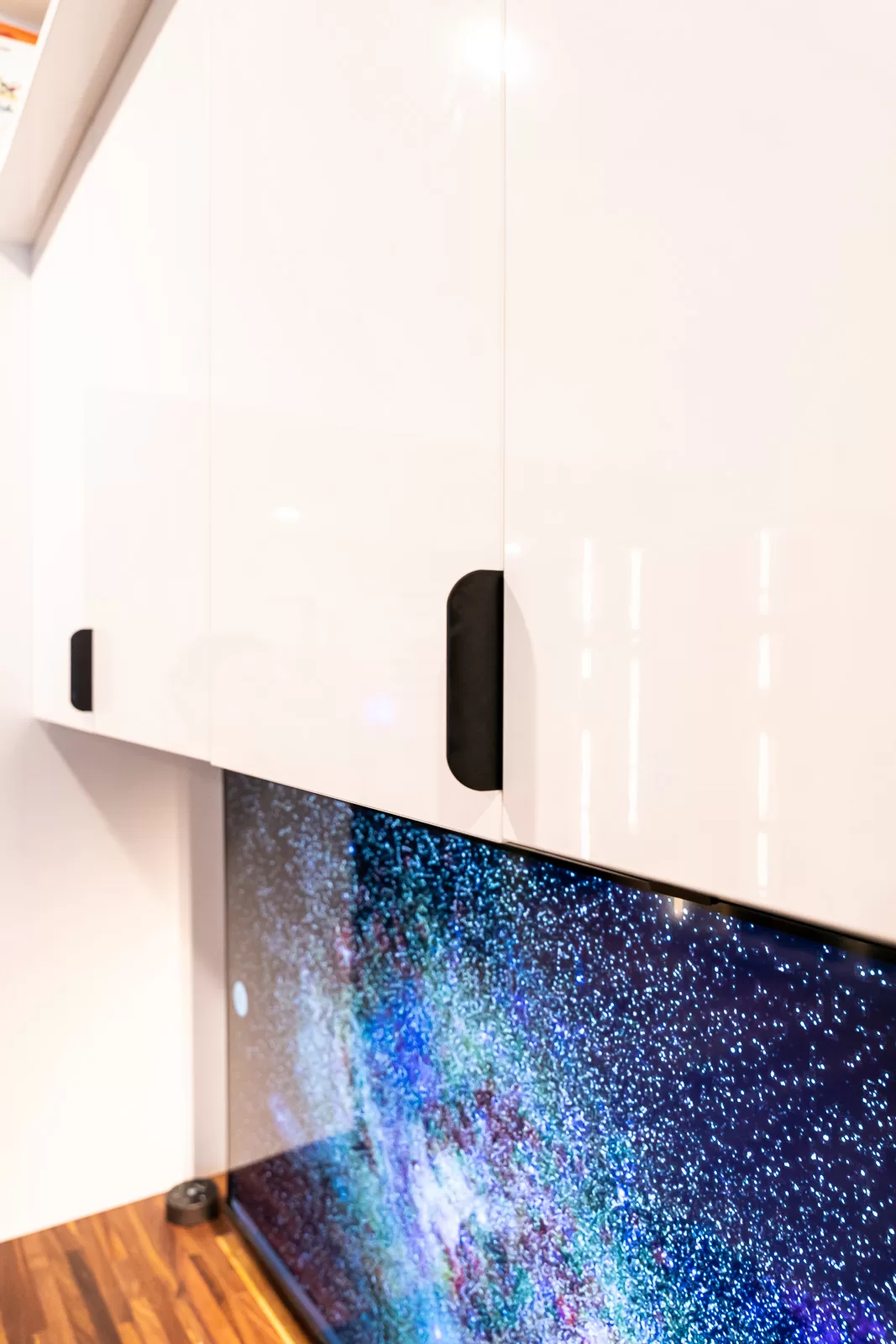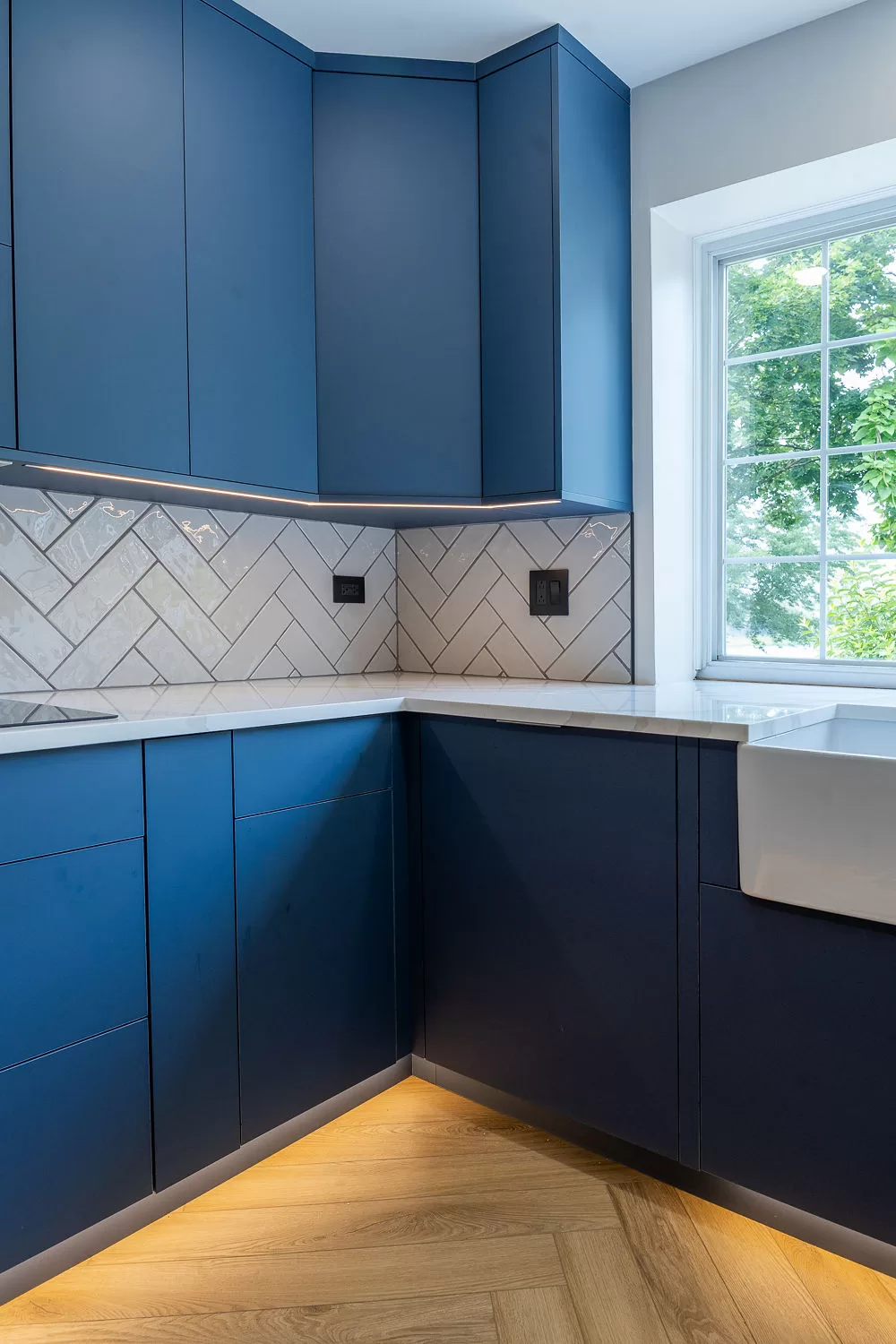
Panel-ready appliances are one of the fastest ways to make a kitchen feel “architectural” and high-end—especially in open-concept condos and modern suburban homes where the kitchen is always visible.
Quick answer: Panel-ready appliances are designed to accept a cabinet-matching front panel (so the appliance blends into the cabinetry). The integrated look is stunning—but it requires early planning because cabinet sizing, clearances, ventilation, and panel thickness must match the exact appliance specs.
Key takeaways:
- Choose your appliance models before cabinet drawings are finalized.
- Integrated kitchens need consistent reveals, hardware decisions (handles vs push-to-open), and a clean lighting plan.
- High-rise projects need extra logistics planning (delivery windows, elevator reservations, building rules).
In this guide:
- What “panel-ready” means
- Pros and cons (who it’s best for)
- Cabinet planning checklist (the important details)
- Chicago condo/high-rise considerations
- Design rules for a seamless integrated look
- Next steps with Sebior
- FAQ
What is a panel-ready appliance?
A panel-ready appliance is built to accept a custom front panel that matches your cabinet doors. Instead of seeing stainless steel or a branded front, you see a continuous cabinetry surface.
Most commonly panel-ready:
- Refrigerators (including integrated column styles)
- Dishwashers
- Beverage fridges / wine coolers (in some lines)
Often paired with panel-ready planning:
- Appliance garage / pocket doors for small appliances
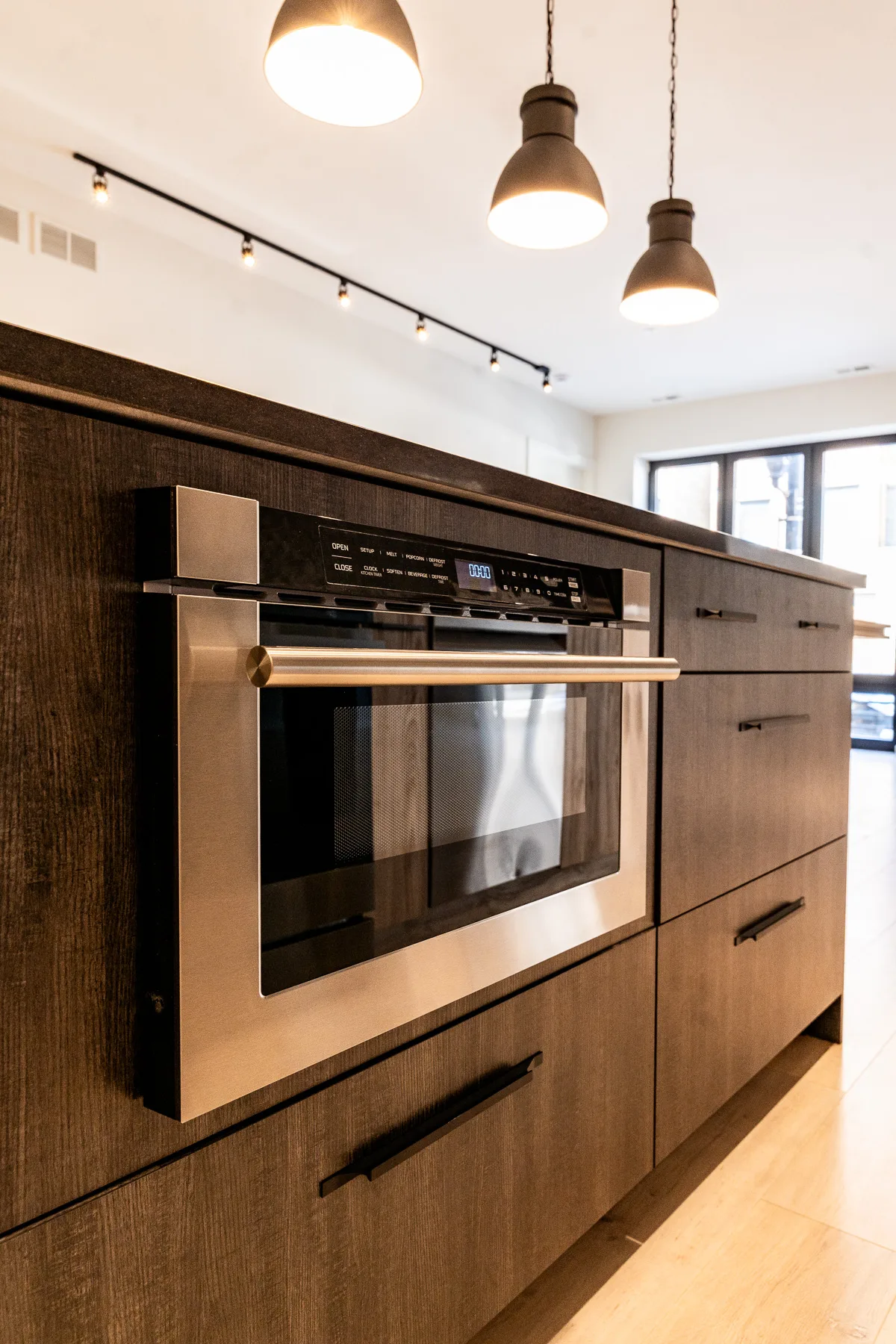
- Built-in microwaves or microwave drawers
- Custom hood surrounds
Pros and cons: is it worth it?
Pros
- Seamless, luxury look (especially in open layouts and condos)
- Cleaner sightlines (the kitchen feels calmer)
- Design flexibility (wood veneer, matte paint, slab doors—everything can match)
Cons
- Requires early decisions (you must choose appliance models early)
- More detailing (panels, hardware, clearances, ventilation)
- Installation precision matters (a few millimeters off looks obvious)
If you’re still budgeting the overall project, start here: Custom Kitchen Cabinets Cost in Chicago (2026).
Cabinet planning checklist (what to decide early)
Use this checklist before your cabinet drawings are finalized:
1) Appliance models + spec sheets
- Confirm exact model numbers (not just “36-inch fridge”)
- Confirm rough opening requirements
- Confirm required ventilation clearances
2) Panel thickness + hardware
- Confirm panel thickness requirements
- Decide on handles vs push-to-open
- If using handles, keep the style consistent across appliances and doors
If you like the cleanest modern look, this is a helpful read: Push-to-Open Systems in Sleek Cabinet Designs.
3) Door swings + clearances
- Confirm fridge and dishwasher door swings won’t collide with islands or walls
- Plan filler panels where needed (so doors open fully)
4) Lighting plan (so the “seamless wall” looks intentional)
- Under-cabinet lighting for task illumination
- Vertical pantry lighting (especially for tall cabinetry walls)
- Toe-kick lighting if you want the “floating” look
Lighting placement matters more than most homeowners expect: Best LED Placement for Frameless Cabinets.
5) Storage strategy
- Decide where small appliances live (appliance garage, pantry wall, or open counters)
- Choose your hidden storage upgrades (trash/recycling, corner solution, tray dividers)
Start with these space-saving reads:
Chicago condo/high-rise considerations
If you’re remodeling in a high-rise, integrated appliances can be a great move—but only if you plan logistics early:
- Confirm delivery windows + elevator reservations
- Confirm COI paperwork and building remodel rules
- Stage deliveries (appliances + cabinetry) so nothing blocks hallways
Use this guide before you schedule: Chicago High-Rise Kitchen Remodel Guide (2026).
3 design rules for a seamless integrated kitchen
- Keep reveals consistent. The small gaps between doors/panels should look uniform across the whole run.
- Choose one “hero” finish direction. Wood veneer, matte painted, or mixed materials—keep it intentional.
- Hide clutter with zones. Beverage/coffee area, pantry wall, or appliance garage keeps counters calm.
Next steps with Sebior
Sebior designs modern kitchen cabinetry for Chicago, the North Shore, and Milwaukee. If you want an integrated appliance look, start by browsing collections and deciding your finish direction:
- Kitchen Cabinets (All Collections)
- New York Kitchen (modern flat + shaker options)
- Denver Kitchen (wood veneer modern)
- Boston Kitchen (premium, shaker/inset luxury)
- Chicago Collection (modern durability + value)
Want an integrated kitchen plan that actually works? Request a design consultation and include your appliance list (or models you’re considering). The earlier we align appliances with cabinetry, the smoother your project becomes.
FAQ
Do panel-ready appliances cost more?
Often yes—both for the appliance and for the added cabinetry panels and detailing. The value is the seamless look.
Can I do panel-ready appliances in a small condo kitchen?
Yes, and they can make a small kitchen feel larger and calmer—if clearances and door swings are planned correctly.
Do panel-ready appliances work with slab or shaker cabinets?
Both. Slab fronts create the most minimal look; shaker can feel “warm modern” when the palette is controlled.